

Play-Based Learning
Learn About Our Teaching Philosophy
Fostering Curiosity
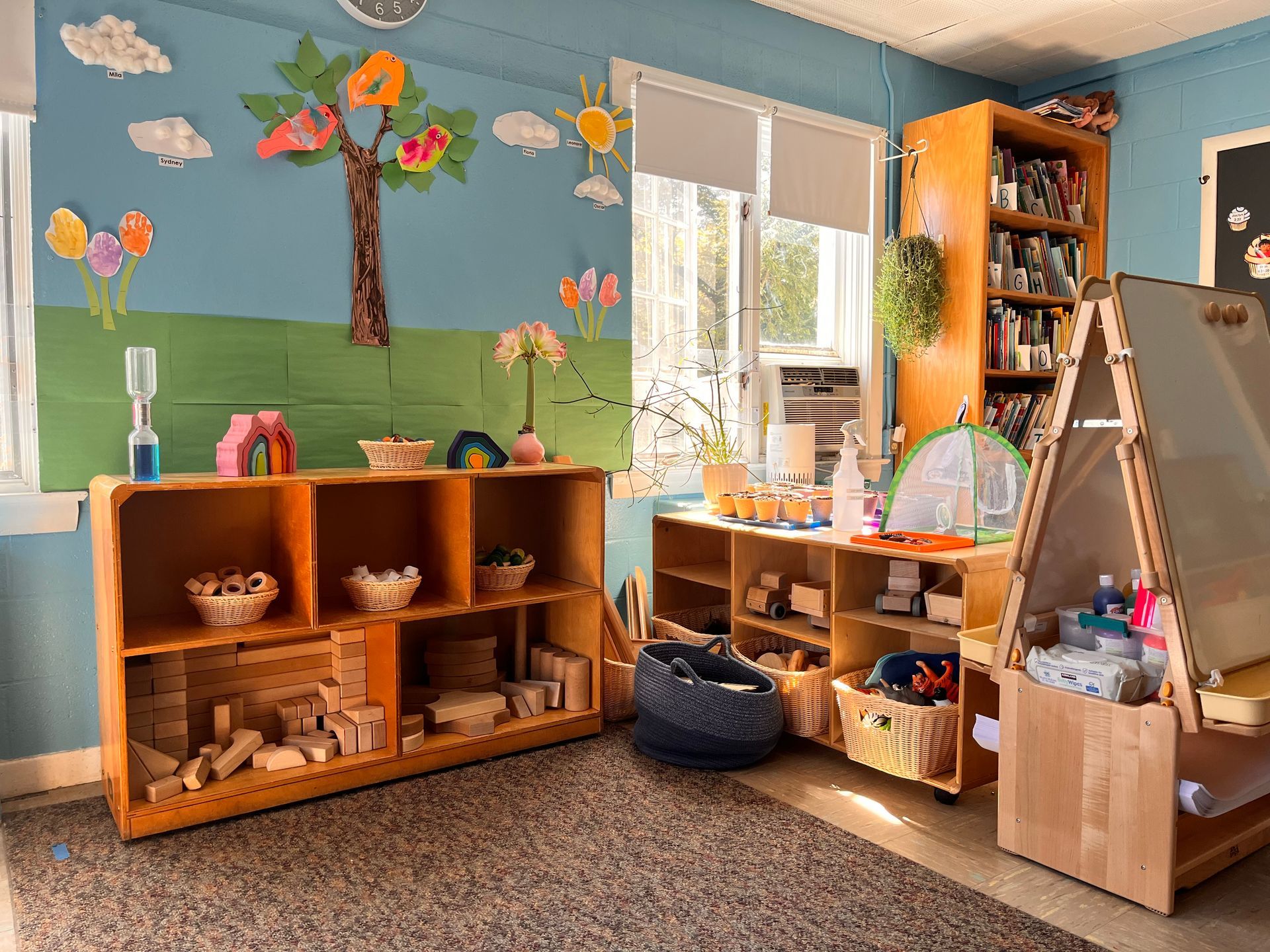
CCL teachers create developmentally appropriate learning experiences in the classroom and outdoors that encourage exploration, discovery, reflection, and growth. Our approach emphasizes spontaneity, flexibility, and responsiveness, allowing teachers to recognize meaningful learning moments and build on children’s emerging ideas.
As trained observers and attentive listeners, our teachers understand that children’s words and actions convey their thoughts, feelings, and understanding of the world. Children learn through play as they investigate how things work, experiment with new ideas, and navigate different situations. By observing children as they play and explore, teachers thoughtfully extend their learning, shaping a curriculum that evolves as children’s interests deepen and their thinking becomes more complex.
Building Routines
Our teachers establish clear, predictable routines that help children understand how the classroom works and how the group plays and learns together. Children help create simple, age-appropriate classroom agreements grounded in mutual respect for both peers and adults. These agreements and expectations are stated clearly, and teachers guide children through conflict by helping them recognize what behaviors support a safe and collaborative classroom community.
Throughout the day, teachers thoughtfully organize a variety of play choices and learning opportunities. These selections help children build independence as they explore materials, ask questions, and make decisions. Teachers consider developmental needs, group dynamics, and children’s emerging interests when offering activities, creating a rhythm to the day that supports both consistency and curiosity.
Forming Relationships
Play is at the heart of how children learn to connect with others. Through shared activities, children practice communication, cooperation, and problem-solving, discovering how to express their feelings, listen to peers, and navigate social situations.
Teachers support these interactions by observing, guiding, and modeling positive social skills, helping children develop empathy, respect, and understanding. As children play together—whether in small groups, pairs, or larger classroom experiences—they build friendships, strengthen bonds, and learn the essential skills that help them thrive both in and out of the classroom.